The 12-3-30 Workout: Does It Actually Work? (What the Science Says)
 Derek Clark
·
·
Updated
Derek Clark
·
·
Updated
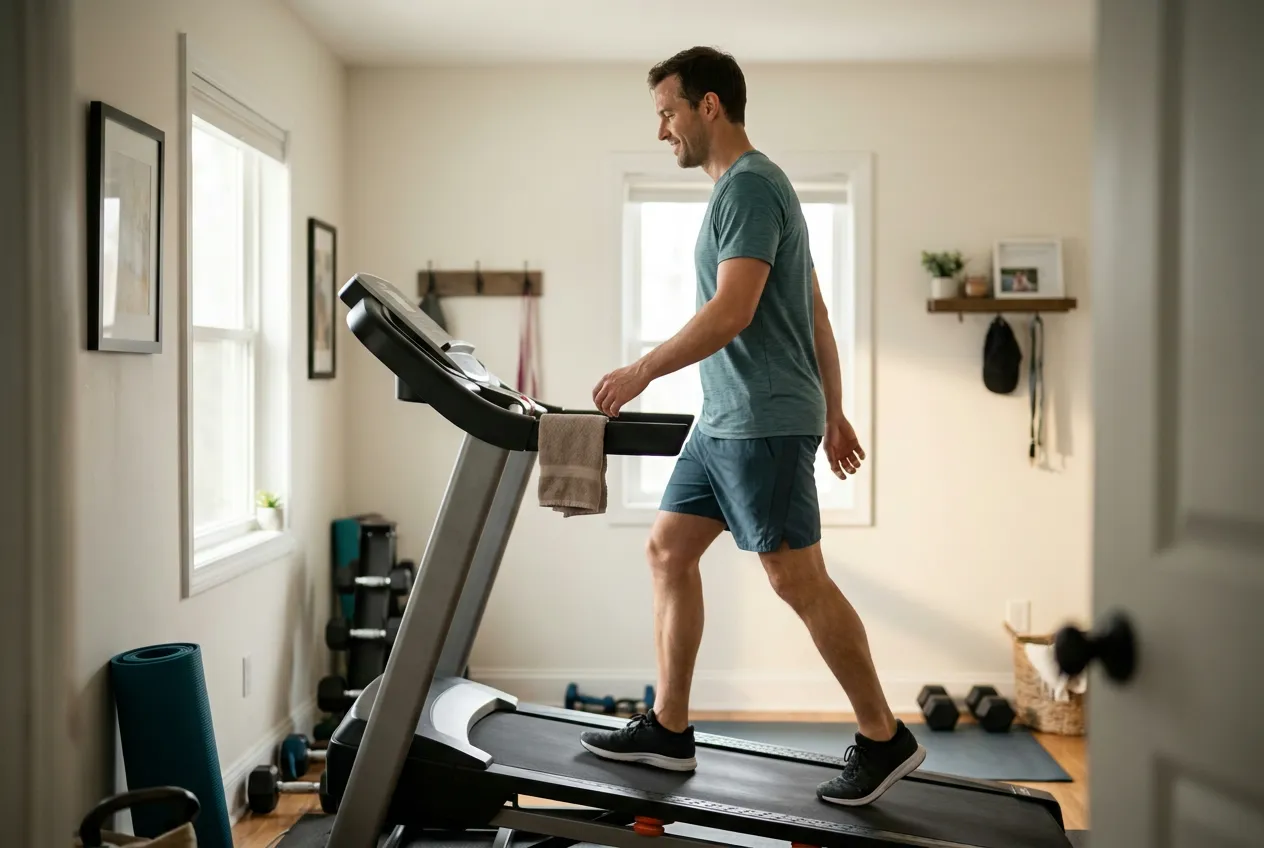
Yes, the 12-3-30 workout works. Walking at a 12% incline and 3.0 mph for 30 minutes comes out to roughly 8 METs of effort, which is vigorous-intensity exercise by federal guidelines, and it burns around 315 calories for a 160-pound person. That’s about two and a half times what the same walk burns on a flat treadmill. It builds real cardio fitness, loads your glutes and calves far harder than flat walking, and stays low impact.
What it won’t do is replace strength training or melt fat without a calorie deficit. And a lot of people can’t do the full thing on day one, which is fine. Here’s what the research says, with numbers, and how to scale it.
What is the 12-3-30 workout?
The routine is exactly what the name says. Set the treadmill incline to 12%, the speed to 3.0 mph, and walk for 30 minutes. No intervals, no sprints, no changing settings partway through.
Social media creator Lauren Giraldo first shared it on YouTube in 2019 as part of a wellness routine video, and it exploded on TikTok in 2020. Her claim was that it helped her lose 30 pounds, and she was open about struggling to finish 30 minutes early on. Cleveland Clinic’s write-up of the trend, from exercise physiologist Katie Lawton, calls it a legitimate workout and points out that five sessions a week adds up to 150 minutes of cardio on its own. (Lauren Giraldo is one of the best walking creators to follow this year.)
Does the 12-3-30 workout actually work?
For cardio fitness and calorie burn, yes. It’s a genuinely hard walk dressed up as an easy one. The 12% incline is what does the work. Flat walking at 3.0 mph is a light effort for most adults (about 3.3 to 3.8 METs depending on which estimate you use). Tilt the belt to 12% and the oxygen cost jumps to around 8.3 METs, because you’re now lifting your body weight up roughly 950 feet of vertical over the session. That’s the height of a decent hill.
It works best for a few groups of people.
- Beginners and people coming back from a layoff, because it’s low impact and easy to remember.
- Anyone who finds running hard on their knees or shins but still wants running-level effort.
- People who want one repeatable session they can compare week to week.
It works less well for anyone whose goal is strength or muscle size, and for anyone expecting fat loss from the workout alone. More on both below.
How many calories does the 12-3-30 workout burn?
The cleanest way to estimate this is the ACSM walking equation, which exercise physiologists use to predict oxygen cost from treadmill speed and grade. Three mph is 80.4 meters per minute. Plug in a 12% grade and you get about 28.9 mL of oxygen per kilogram per minute, or 8.3 METs. Convert that to calories and you get the table below.
| Body weight | 30 min at 12%, 3.0 mph | 30 min flat at 3.0 mph | 20 min at 12%, 3.0 mph |
|---|---|---|---|
| 120 lb | 236 | 94 | 157 |
| 140 lb | 275 | 110 | 184 |
| 160 lb | 315 | 126 | 210 |
| 180 lb | 354 | 141 | 236 |
| 200 lb | 393 | 157 | 262 |
| 220 lb | 433 | 173 | 288 |
| 250 lb | 492 | 196 | 328 |
A few assumptions behind those numbers. They’re gross calories, so they include the roughly one MET you’d burn sitting on the couch during those 30 minutes. The equation is most accurate between 1.9 and 3.7 mph, so 3.0 sits squarely inside its range. And it assumes you’re not holding the handrails (more on that below, because it matters a lot).
The Compendium of Physical Activities lands in the same neighborhood, listing hill climbing at an 11 to 20% grade at 8.8 METs versus 3.8 METs for a flat treadmill at 3.0 to 3.4 mph. The same database puts a 12-minute-mile jog at 8.5 METs, so 12-3-30 is jogging effort at walking impact. Either way, expect two to two and a half times the burn of flat walking at the same speed. If you want flat-ground numbers at other paces, we broke those down in our post on how many calories walking burns.
What heart rate zone is the 12-3-30 workout?
On paper, it’s vigorous. The Physical Activity Guidelines for Americans define moderate intensity as 3.0 to 5.9 METs and vigorous as 6.0 METs or more. At 8.3 METs, 12-3-30 clears the vigorous bar with room to spare, and the guidelines count every vigorous minute as two moderate ones.
How it feels depends entirely on your fitness. The workout demands about 29 mL/kg/min of oxygen no matter who’s doing it. If your max is around 35, a pretty ordinary number for an adult who doesn’t train, that’s over 80% of everything you’ve got, and you’ll be breathing hard within five minutes. If your max is 50, it’s under 60% and feels like a brisk hike. Same treadmill, very different experiences.
The talk test is the easiest check. Moderate means you can talk but not sing. Vigorous means you can only get out a few words before needing a breath. Most people doing 12-3-30 for the first time land somewhere in between, which is exactly the moderate-to-vigorous range the guidelines are built around.
Why incline walking works so well
Three things make the incline special compared to just walking faster.
It’s low impact. You never leave the ground, so there’s no landing force like running. A 2024 study of older men walking at 0% to 20% grades found that peak knee abduction moment (a marker linked to stress on the inner knee) dropped significantly as the incline went up. The authors concluded incline walking can build lower-body strength and cardio fitness without adding strain to aging knees.
It hammers the back of your legs. Researchers at the University of Colorado measured leg muscle activity as people walked up grades of 0 to 9 degrees (9 degrees is about a 16% grade, a bit steeper than 12%). Compared to level walking, gluteus maximus activity increased by 345%, hamstring activity by 635%, and calf activity by 136 to 175% at the steepest grade. Flat walking barely touches your glutes. Incline walking turns each step into a shallow lunge.
It’s real cardio. Eight METs is jogging territory, as the Compendium numbers above show, without the joint loading. Five sessions a week is 150 minutes of vigorous activity, double the weekly minimum in the federal guidelines.
What 12-3-30 won’t do
It’s a cardio workout, and a good one. It is not strength training. The federal guidelines call for muscle-strengthening activity for all major muscle groups on two or more days a week, and no amount of incline walking checks that box. Your glutes and calves get a stimulus, but your upper body, core, and quads under real load do not. Keep lifting, or start.
It will plateau. Your body adapts to a fixed stimulus in a matter of weeks. The first month, 12-3-30 might feel brutal. By month three, the same session burns about the same calories (the math doesn’t change) but your heart rate drifts lower and the fitness gains slow down. When that happens, add a few minutes, nudge the speed to 3.2 or 3.4 mph, or swap one session a week for intervals.
And it’s not a fat-loss shortcut. Three hundred calories a session is meaningful, but only if you don’t eat it back. Our guide on whether walking can reduce belly fat goes into what the research shows, and the short version is that walking helps a lot when paired with a modest calorie deficit and does very little without one. Our complete guide to walking for weight loss covers how to set that deficit up.
How to start 12-3-30 if 12% is too much
Most people should not start at 12%. Cleveland Clinic’s advice is to begin flat for 30 minutes, or at 5%, and see what your body tolerates. That’s good advice. A 5% incline at 3.0 mph is about 5.4 METs, still solidly moderate, and 20 minutes at 12% burns two thirds of the full session’s calories.
This four-week progression gets most people to the full workout without wrecking their shins.
| Week | Incline | Time | Sessions |
|---|---|---|---|
| 1 | 5 to 6% | 20 min | 3 |
| 2 | 8% | 25 min | 3 |
| 3 | 10% | 30 min | 3 to 4 |
| 4 | 12% | 30 min | 3 to 5 |
If any week feels like too much, repeat it. There’s no prize for rushing.
One rule that doesn’t bend: don’t hold the handrails. A University of Wisconsin study had adults walk on an inclined treadmill with their arms swinging, with their hands resting on the rails, or gripping them. Gripping cut oxygen consumption by 15 to 21% and heart rate by 10 to 15% compared to walking hands-off. That’s a fifth of your workout gone, and the calorie table above no longer applies. If you need the rails to keep up, the incline is too steep for you right now. Drop it and build back.
Is the 12-3-30 workout safe?
For most healthy adults, yes. The places it tends to bite are predictable.
- Shins. Walking uphill asks the muscles along the front of your shin to pull your toes up higher on every step. Cleveland Clinic lists suddenly ramping up your training, flat feet, and unsupportive shoes among the main shin splint risk factors, and recommends not increasing activity by more than 10% in a week. That’s the whole reason for the progression above.
- Calves and Achilles. A 12% grade keeps your ankle flexed upward the entire time. Tight calves will complain. Stretch them after, not before, and don’t go from zero to five sessions a week.
- Lower back. The instinct on a steep incline is to fold forward from the waist. Lean from the ankles instead, keep your chest up, and let your arms swing. If your back aches during the session, your incline is too high.
Check with a doctor first if you have heart disease, uncontrolled blood pressure, a history of knee or hip surgery, or you’re pregnant and haven’t been exercising. Vigorous exercise is safe for most people, but “most” isn’t “all.”
Taking 12-3-30 outside: hill walking
You don’t need a treadmill. The whole workout is 30 minutes of walking up a steep hill, and hills exist outside.
The catch is finding one steep enough. A 12% grade means 12 feet of rise for every 100 feet forward, which is steeper than most neighborhood streets and closer to a real trail climb. A 6 to 8% hill you can walk up and down repeatedly for 30 minutes gets you most of the benefit, and the descents give your heart a short break the treadmill never does. If you want to match the treadmill’s total climb, you’re looking for around 950 feet of elevation gain in a session. Vima Walk is a GPS walking tracker for iPhone and Apple Watch that logs distance, pace, elevation, and daily steps, so you can see how your hill stacks up.
Outdoor hills also fix the biggest complaint about 12-3-30, which is that staring at a gym wall for half an hour gets old. We covered the wider tradeoffs in our post on treadmill vs. outside walking.
Frequently Asked Questions
How many times a week should you do 12-3-30?
Three to five sessions a week is the sweet spot. Five sessions gets you to 150 minutes of vigorous activity, which is double the weekly minimum. Start with three and add sessions only once your shins and calves stop complaining.
Is 12-3-30 better than running?
It’s different, not better. At about 8 METs it’s roughly the same effort as a 12-minute-mile jog, with far less impact on your knees and shins. Running is more time efficient at faster paces and builds running-specific fitness, but 12-3-30 is easier to recover from and easier to stick with.
Can you do 12-3-30 every day?
You can, but you probably shouldn’t at first. Daily incline walking is a common route to shin splints and calf strains in the first few weeks. Build to five days a week over a month, then decide whether daily sessions feel good or just feel like a rule.
Does 12-3-30 build muscle?
It builds some glute, hamstring, and calf endurance, since those muscles work several times harder on a steep incline than on flat ground. It won’t build the size or strength you’d get from lifting. Treat it as cardio with a leg bonus, not as leg day.
How long does it take to see results from 12-3-30?
The session itself gets easier within a few weeks, and that’s your cardio fitness improving. Body composition changes depend on your diet. If you’re in a modest calorie deficit, expect steady loss over months, not weeks; if you’re not, expect fitness gains but not much weight change.
The bottom line on 12-3-30
The 12-3-30 workout is a legitimately good cardio session with a catchy name. The incline turns an easy walk into vigorous exercise, about 300 calories for an average adult, and it does that without the pounding of running. That’s not hype. The physiology backs it up.
Its limits are the same as any single workout’s. It’s not strength training, it won’t outrun a bad diet, and your body will adapt to it. Treat it as one tool, keep your hands off the rails, and build up to 12% over a few weeks instead of forcing it on day one.
If you’ve got a treadmill, try it this week at 5% and 20 minutes. If you’ve got a hill, even better.

Derek Clark
Co-founder of Vima Fitness. Building simple, privacy-focused fitness apps for iPhone and Apple Watch since 2011. Runner, cyclist, and firm believer that fitness apps shouldn't need a tutorial.