Healthy Eating on a Budget: What Actually Works (Not Just Rice and Beans)
 Derek Clark · · Updated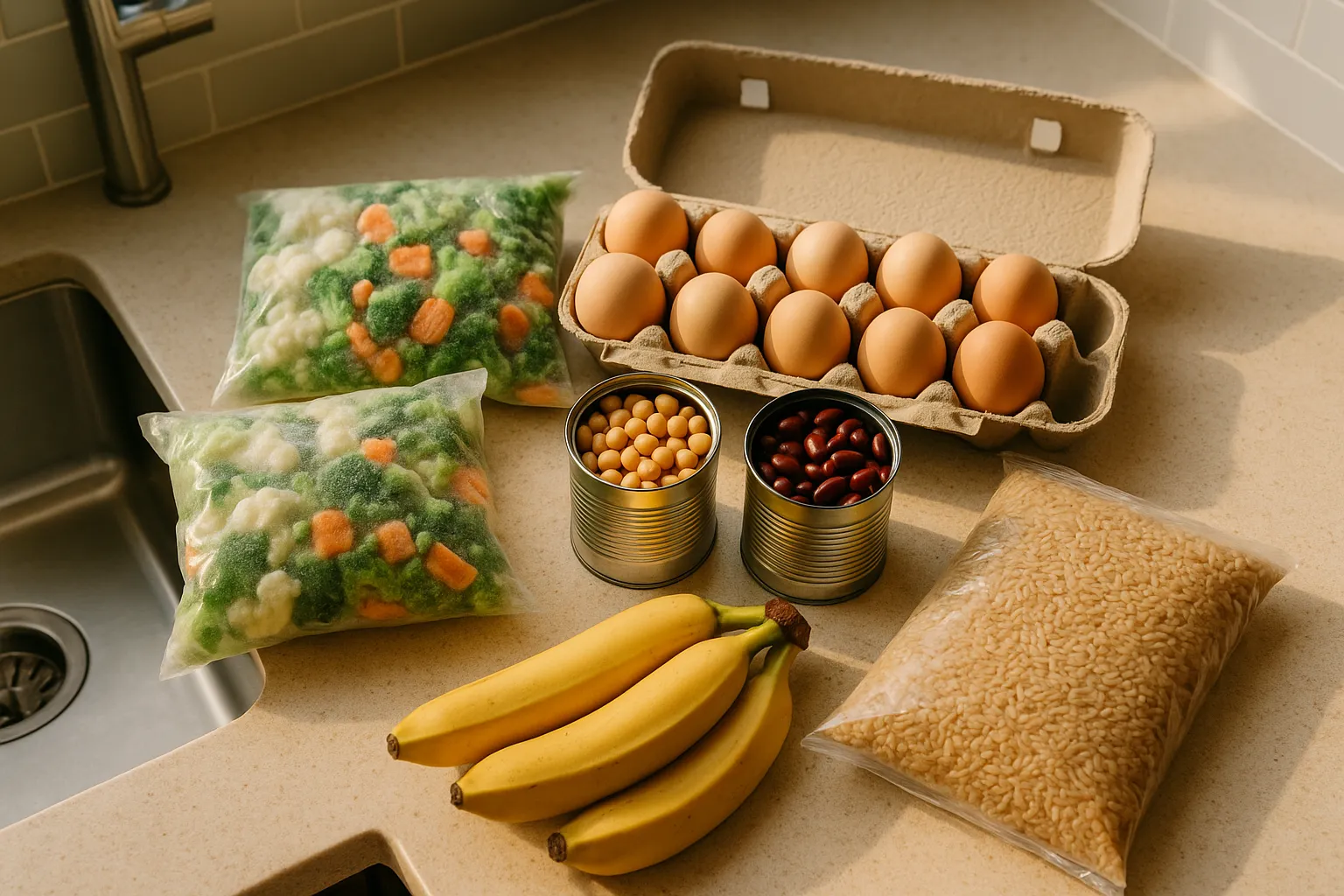
You’ve heard the advice a million times. “Just buy rice and beans.” “Meal prep on Sundays.” “Stop buying coffee.”
Cool. Thanks. Super helpful.
The reality is that eating well on a budget is harder than most articles make it sound. Food prices keep climbing, and healthy options often cost more than their processed alternatives. But it’s not impossible. And the strategies that actually work might not be the ones you’d expect.
Here’s what the research says (and what actually makes a difference in your grocery bill).
The Frozen vs. Fresh Myth
Let’s start with the biggest misconception in budget eating: that fresh produce is always better than frozen.
It’s not.
A study published in the Journal of Food Composition and Analysis found that frozen fruits and vegetables were nutritionally comparable to fresh ones. In some cases, frozen produce actually had higher levels of certain vitamins because it’s flash-frozen at peak ripeness, while “fresh” produce might sit in a truck for days before reaching your grocery store.
The cost difference is significant too. Research from Michigan State University showed that canned and frozen vegetables cost less per edible cup than fresh. Frozen broccoli, spinach, and berries are almost always cheaper than fresh, and they don’t go bad in your fridge before you get around to using them.
That last part matters more than people think. The USDA estimates that the average American household wastes about 30-40% of their food supply. If you’re throwing away wilted lettuce and brown bananas every week, you’re literally tossing money in the trash.
So buy frozen. No guilt required.
Protein Doesn’t Have to Be Expensive
Protein is usually the most expensive part of any meal. Chicken breast, salmon, lean beef. It adds up fast.
But here’s something worth thinking about: the cost per gram of protein varies wildly depending on the source.
Eggs are one of the cheapest protein sources available. A dozen eggs typically costs around $3-4 and delivers about 72 grams of protein. That’s roughly 5 cents per gram. Compare that to chicken breast (around 8-10 cents per gram) or salmon (which can run 15-20 cents per gram).
Other budget-friendly protein winners:
- Canned tuna or sardines (cheap, shelf-stable, and loaded with protein)
- Dried lentils and beans (pennies per serving, and they’re packed with fiber too)
- Greek yogurt (especially store brand, great protein-to-cost ratio)
- Cottage cheese (having a bit of a comeback, and for good reason)
- Peanut butter (not the highest protein per calorie, but extremely cheap and filling)
You don’t need to eat chicken breast six times a week. Mixing in cheaper protein sources can cut your grocery bill significantly without sacrificing nutrition.
Batch Cooking Beats Meal Prep
“Meal prep” has become this intimidating thing where you spend five hours on Sunday making perfect little containers of chicken, rice, and broccoli. Most people try it once and never do it again.
Batch cooking is different. It’s simpler.
The idea: cook a large amount of one or two things, then use them in different meals throughout the week. Make a big pot of chili on Monday. Have it over rice on Tuesday, in a wrap on Wednesday, and over a baked potato on Thursday. Same base, different meals, zero additional cooking.
This works for budget eating because:
- Buying ingredients in larger quantities is almost always cheaper per serving
- You waste less food because you’re actually using what you buy
- You’re less likely to order takeout when there’s already food ready to eat
The USDA’s MyPlate program recommends planning meals around what’s on sale, then batch cooking those ingredients. It’s one of the most effective strategies for reducing food costs while eating well.
If you want more practical tips on making cooking feel less overwhelming, check out our guide on meal prep for beginners.
The Store Brand Secret
This one is almost too simple. But it works.
Store brand products are, in most cases, nearly identical to name brands. The FDA requires that store brand foods meet the same safety and quality standards as national brands. Many are literally made in the same factories.
The price difference? Usually 20-30% less.
Store brand oats, canned beans, frozen vegetables, rice, pasta, canned tomatoes, yogurt. These are all essentially the same product with different packaging. Switching even half your cart to store brand can save you $20-40 per grocery trip without any change in quality.
Stop Buying Drinks
This is the budget tip that nobody wants to hear.
Beverages are one of the highest-markup items in any grocery store. Juice, soda, fancy sparkling water, bottled tea. You’re paying a premium for flavored water (or sugar water) when tap water is basically free.
If plain water is too boring, try:
- A water filter pitcher (pays for itself in weeks)
- Sliced fruit or cucumber in your water
- Store brand sparkling water (if you really need the fizz)
- Tea bags (pennies per cup, hundreds of flavors)
Cutting out purchased beverages can realistically save $30-50 per month for a single person. That’s $360-600 per year. For most people, it’s the single biggest easy win in their grocery budget.
Plan Around Sales, Not Recipes
Most people do it backwards. They find a recipe, then buy the ingredients. That’s fine if budget isn’t a concern, but it’s terrible for saving money.
Flip the process. Check what’s on sale first, then figure out what to make with those ingredients.
Chicken thighs on sale for $1.99/lb? That’s your protein for the week. Peppers are 3 for $2? Time for fajitas or stir fry. Ground turkey marked down because it’s close to its sell-by date? Buy it and cook it tonight.
This takes some flexibility, but it’s how most budget-conscious families actually eat well. You work with what’s cheap and available, not against it.
Track What You’re Actually Eating
Here’s where calorie tracking becomes surprisingly useful for budget eating too.
When you track your food (even loosely), you start noticing patterns. Maybe you’re spending $15/week on snacks that don’t really fill you up. Maybe your protein is consistently low because you’re filling up on cheap carbs. Maybe you’re eating out three times a week because you ran out of groceries by Wednesday.
Tracking gives you data. And data helps you make smarter decisions about where your food budget actually goes.
An app like AI Calorie Tracker makes this pretty painless. Snap a photo of your meal and it logs the calories and macros automatically. No weighing, no searching through databases. You can spot the gaps in your nutrition (and your budget) without much effort.
The Bottom Line
Eating healthy on a budget isn’t about deprivation. It’s about being strategic.
Buy frozen produce. Choose cheaper protein sources. Batch cook instead of elaborate meal prep. Switch to store brands. Cut the beverages. Plan around sales. And track what you’re eating so you can see where the money (and the nutrients) are actually going.
None of these strategies require willpower or sacrifice. They just require a small shift in how you shop and cook. Start with one or two changes this week. The savings add up faster than you’d think.
Frequently Asked Questions
Is it really cheaper to cook at home than to eat out?
Yes, significantly. The USDA estimates that the average meal cooked at home costs about $4-5 per person, while the average restaurant meal costs $13-15. Even with rising grocery prices, home cooking is roughly 3-4 times cheaper per meal.
Are canned vegetables healthy?
They are. Canned vegetables retain most of their nutrients through the canning process. The main thing to watch for is added sodium. Look for “no salt added” or “low sodium” versions, or just rinse them before cooking to remove about 40% of the sodium.
How much should I budget for groceries per month?
The USDA publishes monthly food cost plans that vary by age and household size. For a single adult, their “moderate” plan runs roughly $300-350 per month. But many people eat well for less by using the strategies in this article. A realistic target for budget-conscious healthy eating is $200-300 per month for one person.
What’s the cheapest healthy meal I can make?
A pot of lentil soup or chili with canned beans, canned tomatoes, and frozen vegetables is hard to beat. You can make 6-8 servings for under $5 total. Rice and beans with salsa and a fried egg is another classic that costs well under $1 per serving and delivers solid protein, carbs, and fiber.
Do I need to buy organic to eat healthy?
No. Organic produce is not nutritionally superior to conventional produce in any meaningful way. If you’re on a budget, buying conventional fruits and vegetables is absolutely fine. The most important thing is eating enough fruits and vegetables, period. Don’t let the organic debate stop you from eating produce.
We wrote a dedicated post on this: How to Build a Healthy Meal (Without a Nutrition Degree).

Derek Clark
Co-founder of Vima Fitness. Building simple, privacy-focused fitness apps for iPhone and Apple Watch since 2011. Runner, cyclist, and firm believer that fitness apps shouldn't need a tutorial.