How to Build a Healthy Meal (Without a Nutrition Degree)
 Derek Clark · · Updated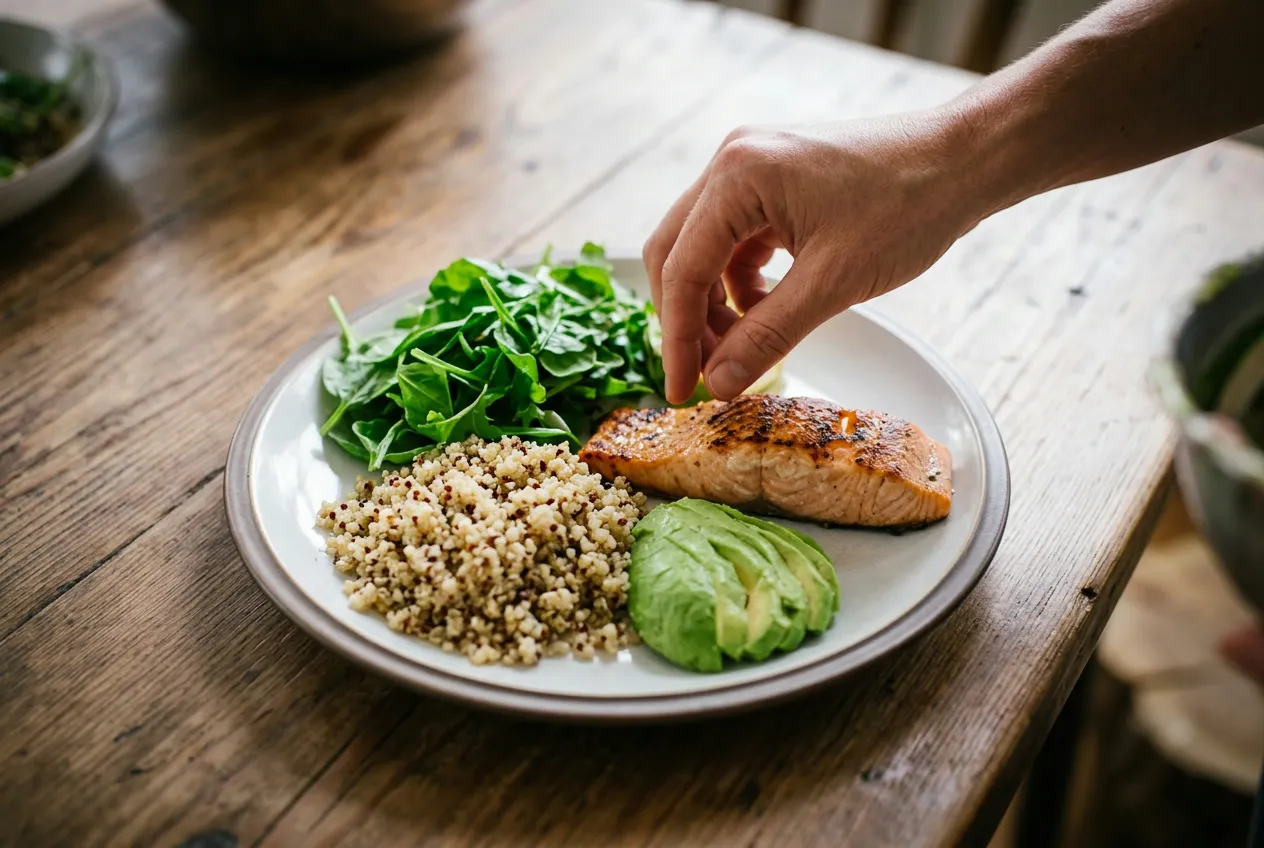
You don’t need to memorize macronutrient ratios or weigh every grain of rice to eat well. Learning how to build a healthy meal is actually straightforward once you have a simple framework to follow.
We wrote a dedicated post on this: Meal Prep for Beginners: Start Without Wasting Your Sunday.
Think in categories, not calories. Every solid meal has four components: protein, vegetables, carbs, and healthy fat. Get those four on your plate in roughly the right proportions, and you’re ahead of most people who spend hours overthinking their diet.
Here’s the exact plate-building system backed by research from Harvard’s Healthy Eating Plate and the USDA’s MyPlate guidelines.
If you want the full breakdown, see Healthy Eating on a Budget: What Actually Works (Not Just Rice and Beans).
The Four-Part Plate Framework
Picture a standard dinner plate. Now mentally divide it into sections:
- ½ the plate: Vegetables and fruits (mostly vegetables)
- ¼ the plate: Protein
- ¼ the plate: Complex carbs
- A small side: Healthy fat
That’s it. No calculator required. Let’s break down each section.
Vegetables: The Half-Plate Hero
Vegetables should take up the most real estate on your plate. They’re packed with fiber, vitamins, and minerals while being naturally low in calories.
Go for variety and color. Dark leafy greens, bell peppers, broccoli, tomatoes, zucchini, carrots, cauliflower. The more colors you include, the broader range of nutrients you’re getting.
Easy veggie wins: – Roast a sheet pan of mixed vegetables on Sunday for the whole week – Keep frozen vegetables stocked (they’re just as nutritious as fresh) – Add spinach or peppers to eggs, stir-fries, or pasta dishes
One note from Harvard’s Nutrition Source: potatoes don’t count as vegetables here because of their impact on blood sugar. They belong in the carb section.
Protein: Your Palm-Sized Portion
Protein keeps you full, supports muscle repair, and stabilizes energy throughout the day. Aim for a portion roughly the size of your palm (more on the hand method below).
Great protein sources: – Chicken, turkey, or fish – Beans, lentils, and chickpeas – Eggs – Greek yogurt or cottage cheese – Tofu or tempeh
Mix it up throughout the week. Harvard recommends choosing fish, poultry, beans, and nuts as your go-to options while limiting red meat and avoiding processed meats like bacon and sausage.
Complex Carbs: Your Energy Source
Carbs aren’t the enemy. Your body needs them for energy (especially your brain). The key is choosing whole, minimally processed options that won’t spike your blood sugar.
Solid carb choices: – Brown rice, quinoa, or farro – Oats – Whole wheat bread or pasta – Sweet potatoes or regular potatoes – Corn tortillas
These whole grains have a milder effect on blood sugar and insulin compared to their refined counterparts like white bread and white rice. Keep your carb portion to about a quarter of the plate, roughly one cupped handful.
Healthy Fat: The Finishing Touch
Fat doesn’t make you fat. It helps your body absorb fat-soluble vitamins, keeps your skin healthy, and makes food taste better. That last part matters because it means you’ll actually enjoy eating well.
Healthy fat options: – Olive oil or avocado oil for cooking – Half an avocado – A small handful of nuts or seeds – A drizzle of tahini or nut butter
Keep fat portions modest since it’s calorie-dense. A thumb-sized amount per meal is a solid guideline.
The Hand Portion Guide (No Measuring Cups Needed)
Measuring cups and food scales work, but they’re not always practical. Precision Nutrition’s hand-size method gives you a portable, always-available measuring tool:
| Food Group | Hand Measure | Roughly Equals |
|---|---|---|
| Protein | Your palm | 3–4 oz / 20–30g protein |
| Vegetables | Your fist | 1 cup |
| Carbs | Your cupped hand | ½ cup / 20–30g carbs |
| Fats | Your thumb | 1 tablespoon |
Per meal starting point: – Women: 1 palm protein, 1 fist veggies, 1 cupped hand carbs, 1 thumb fat – Men: 2 palms protein, 2 fists veggies, 2 cupped hands carbs, 2 thumbs fat
These are starting points, not rigid rules. Adjust based on your hunger, activity level, and how many calories you actually need.
Putting It Together: Balanced Meal Examples
Here’s what this looks like in practice:
Breakfast: Two scrambled eggs (protein) + sautéed spinach and tomatoes (veggies) + a slice of whole grain toast (carbs) + half an avocado (fat)
Lunch: Grilled chicken breast (protein) + a big mixed salad with cucumbers, peppers, and carrots (veggies) + quinoa (carbs) + olive oil dressing (fat)
Dinner: Salmon fillet (protein) + roasted broccoli and asparagus (veggies) + sweet potato (carbs) + a sprinkle of sesame seeds (fat)
Quick bowl: Ground turkey (protein) + stir-fried bell peppers and snap peas (veggies) + brown rice (carbs) + drizzle of sesame oil (fat)
Notice the pattern? Every meal hits all four categories. Once you internalize this framework, building healthy meals becomes automatic.
Simple Swaps to Level Up Your Plate
Already eating this way? Small upgrades make a difference:
- White rice → brown rice, quinoa, or cauliflower rice
- Iceberg lettuce → spinach, arugula, or mixed greens
- Sour cream → Greek yogurt
- Juice → whole fruit
- Croutons → nuts or seeds
- Butter for cooking → olive oil or avocado oil
These swaps follow the same principle from 3 Simple Steps to a Healthier Diet: small, sustainable changes beat dramatic overhauls every time.
FAQ
Do I need to eat this way for every single meal?
No. Aim for most meals, most days. Perfection isn’t the goal. If 80% of your meals follow this framework, you’re doing great.
What if I don’t like vegetables?
Start with the ones you can tolerate, even if it’s just carrots and corn. Roasting vegetables with olive oil and salt changes the game for a lot of people. You can also blend spinach into smoothies or fold finely chopped veggies into sauces.
How do I know if my portions are right for my goals?
The hand method is a starting point. If you’re losing weight too fast, add a portion. If you’re not seeing progress, remove one cupped hand of carbs or one thumb of fat. For more precise tracking, counting calories in homemade meals gives you a clearer picture. Tools like AI Calorie Tracker can simplify that process.
If you’re working toward a calorie deficit, the hand method paired with a food log is a solid combo.
Can I build healthy meals on a budget?
Absolutely. Frozen vegetables, canned beans, eggs, rice, and oats are some of the most nutritious and affordable foods available. You don’t need organic, grass-fed, artisanal anything to eat well.
Is it okay to eat the same meals every day?
If you enjoy them and they cover your nutritional bases, yes. Many people find success with a rotating set of 5–7 meals they like. It reduces decision fatigue and makes grocery shopping easier.
The Bottom Line
Building a balanced meal comes down to four components on one plate: protein, vegetables, complex carbs, and a bit of healthy fat. Use the plate visual to get proportions right and the hand method when you need a quick portion check.
You don’t need a nutrition degree or a complicated meal plan. You just need a framework, and now you’ve got one.

Derek Clark
Co-founder of Vima Fitness. Building simple, privacy-focused fitness apps for iPhone and Apple Watch since 2011. Runner, cyclist, and firm believer that fitness apps shouldn't need a tutorial.