Meal Prep for Beginners: Start Without Wasting Your Sunday
 Derek Clark · · Updated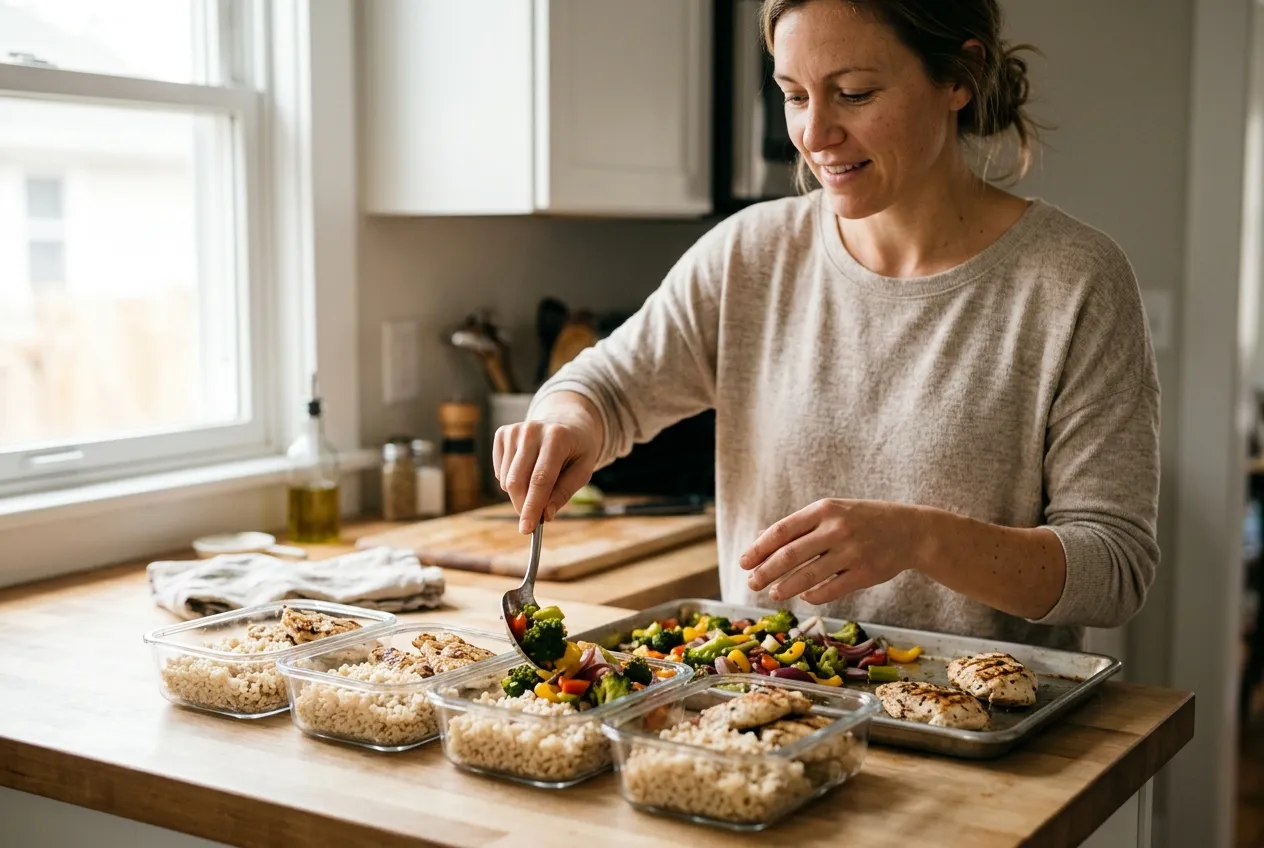
You’ve seen the Instagram posts. Seventeen perfectly portioned containers lined up on a granite countertop, each one a little masterpiece of grilled chicken, roasted sweet potato, and broccoli. And you’ve thought: I don’t have six hours on a Sunday for that.
Good news: meal prep for beginners doesn’t look anything like that. You don’t even need three hours. The people who stick with meal prep long term aren’t the ones doing elaborate weekly cook-a-thons. They’re the ones who figured out how to do just enough prep to make their week easier.
If you want the full breakdown, see What to Cook When You Don’t Know What to Cook.
Let’s talk about what that actually looks like.
Forget the All-or-Nothing Approach
The biggest mistake beginners make is trying to prep every single meal for the entire week on day one. That’s a recipe for burnout, not dinner.
Instead, start with two or three meals. According to Harvard’s Nutrition Source, the best approach for beginners is to “aim to create enough dinners for 2-3 days of the week” and build from there. You can always scale up once you’ve got a rhythm going.
Pick the meals where you’re most likely to make a bad decision. For most people, that’s weekday lunches. If you’re the person who hits the drive-thru at noon because you didn’t pack anything, start there. If your weak spot is dinners (you get home exhausted and order takeout), prep those instead.
The “Cook Once, Eat Twice” Strategy
This is the simplest form of easy meal prep, and it works brilliantly. Whenever you cook dinner, just double the recipe. Eat half tonight, pack the other half for tomorrow’s lunch or a second dinner later in the week.
We wrote a dedicated post on this: How to Organize Your Recipes So You Actually Cook Them.
No special containers. No dedicated prep day. No meal plan spreadsheet. You’re already cooking, so you’re just making more of it.
In practice, that looks something like this:
- Monday night: Make a big pot of chili. Eat dinner, portion out two more servings for lunches.
- Wednesday night: Roast a whole sheet pan of chicken thighs with vegetables. Tonight’s dinner plus Thursday’s lunch, done.
- Sunday afternoon: Cook a large batch of rice or quinoa. Use it across three or four different meals during the week.
That last point is a key concept in batch cooking: prep your base ingredients, then remix them. A batch of seasoned ground turkey can become taco bowls on Monday, stuffed peppers on Wednesday, and a pasta sauce on Friday.
Batch Cooking Basics: The Three Things to Prep
If you want to go beyond “cook once, eat twice” and actually set aside 60 to 90 minutes for a proper prep session, focus on three categories:
1. A Protein
Cook one large batch of protein for the week. Chicken breasts, ground turkey, hard-boiled eggs, or baked tofu all work. Season it simply so you can take it in different flavor directions throughout the week.
2. A Grain or Starch
Rice, quinoa, pasta, roasted potatoes, or sweet potatoes. These keep well in the fridge and pair with almost anything. One big batch covers you for days.
3. Vegetables
Wash and chop raw veggies for snacking and salads. Roast a sheet pan of mixed vegetables (broccoli, bell peppers, zucchini, onions) that you can add to any meal.
Three things. That’s the whole system. With those building blocks prepped, you can assemble different meals all week without eating the same thing every day. A Cleveland Clinic guide to meal prep recommends this modular approach because it reduces decision fatigue while keeping your meals flexible enough that you don’t get bored.
Storage Tips That Actually Matter
Meal prep only works if your food is still good when you go to eat it. A few rules worth knowing:
- The four-day rule: According to the USDA, cooked leftovers are safe in the refrigerator for three to four days. If you’re prepping on Sunday, eat those meals by Wednesday or Thursday.
- Freeze what you won’t eat in time. Soups, stews, chili, and cooked grains all freeze beautifully. Make a double batch and freeze half for the following week.
- Invest in decent containers. Glass containers with locking lids are worth the money. They don’t stain, they reheat evenly, and they last for years.
- Let food cool before sealing. Trapping steam in a sealed container creates moisture, which leads to soggy food and faster spoilage.
A Simple Beginner Meal Prep Schedule
Here’s a realistic first week that takes about 60 minutes total:
Sunday (45 minutes): – Cook a big batch of chicken thighs (seasoned with salt, pepper, garlic powder, and paprika) – Make a pot of rice – Chop vegetables for the week (bell peppers, cucumbers, carrots)
Wednesday (15 minutes): – Cook a second protein (ground turkey or baked salmon) – Prep any additional fresh ingredients
Two short sessions, not one massive cooking marathon. You’ll have enough prepped food to cover lunches and several dinners without scrambling.
If you’re tracking your nutrition alongside meal prep, knowing what’s in your food becomes much easier when you made it yourself. Our guide on how to count calories in homemade meals breaks down exactly how to do that without weighing every ingredient.
Common Beginner Mistakes (and How to Dodge Them)
Prepping food you don’t actually like. If you hate plain chicken breast, don’t make five days of it. Use recipes you already enjoy.
Making everything identical. Eating the exact same bowl five days in a row gets old fast. Prep components (not complete meals) so you can mix and match.
Skipping seasoning. Bland meal prep is the number one reason people quit. Use spices, sauces, and marinades generously. Add fresh toppings (avocado, salsa, herbs) at mealtime to keep things interesting.
Going too big too fast. You don’t need 14 containers and a color-coded calendar. Start with three meals. Get comfortable. Then grow.
FAQ
How long does meal prep actually take?
For beginners prepping two to three meals, expect about 60 to 90 minutes per week. As you get more comfortable, that time shrinks because you develop routines and learn which recipes are efficient. Many people find that splitting prep across two shorter sessions (instead of one big one) feels much more manageable.
Can I meal prep if I don’t know how to cook?
You don’t need chef skills to roast chicken thighs, boil rice, and chop vegetables. Start with one-pan recipes and simple combinations. Budget Bytes’ Meal Prep 101 is a great resource for straightforward, beginner-friendly recipes that scale well.
How do I keep meal prepped food from getting boring?
Prep components instead of complete meals. A batch of grilled chicken can go into a salad on Monday, a wrap on Tuesday, and a stir-fry on Wednesday. Change up your sauces, toppings, and sides to create variety from the same base ingredients.
Is meal prep actually cheaper than eating out?
In most cases, significantly cheaper. According to the USDA’s food cost data, Americans spend roughly half their food budget on eating out. Buying ingredients in bulk and cooking at home typically costs a fraction of restaurant or takeout meals. The savings add up quickly, especially if you’re currently eating out for lunch every day.
Our guide Healthy Eating on a Budget: What Actually Works (Not Just Rice and Beans) goes into this in more detail.
How do I track calories when I’m meal prepping?
Since you’re controlling the ingredients, homemade meals are actually the easiest to track accurately. Measure your ingredients when you cook, divide by the number of servings, and you’ve got a reliable per-portion count. Tools like AI Calorie Tracker can simplify this by letting you log homemade meals quickly. For a deeper walkthrough, check out our guide on calorie counting without losing your mind.
Start Small, Stay Consistent
Meal prep isn’t about becoming a weekend line cook. It’s about making your week a little easier by doing a little work upfront. Start with doubling one dinner. Then try prepping lunches for three days. Build the habit before you build the system.
Our guide How to Build a Healthy Meal (Without a Nutrition Degree) goes into this in more detail.
The people who succeed at beginner meal prep aren’t the ones with the most elaborate setups. They’re the ones who found a routine simple enough to actually repeat every week.
Pick two meals. Prep them this weekend. See how it feels.

Derek Clark
Co-founder of Vima Fitness. Building simple, privacy-focused fitness apps for iPhone and Apple Watch since 2011. Runner, cyclist, and firm believer that fitness apps shouldn't need a tutorial.