Running in the Rain: Is It Bad, What to Wear, When to Skip
 Derek Clark
·
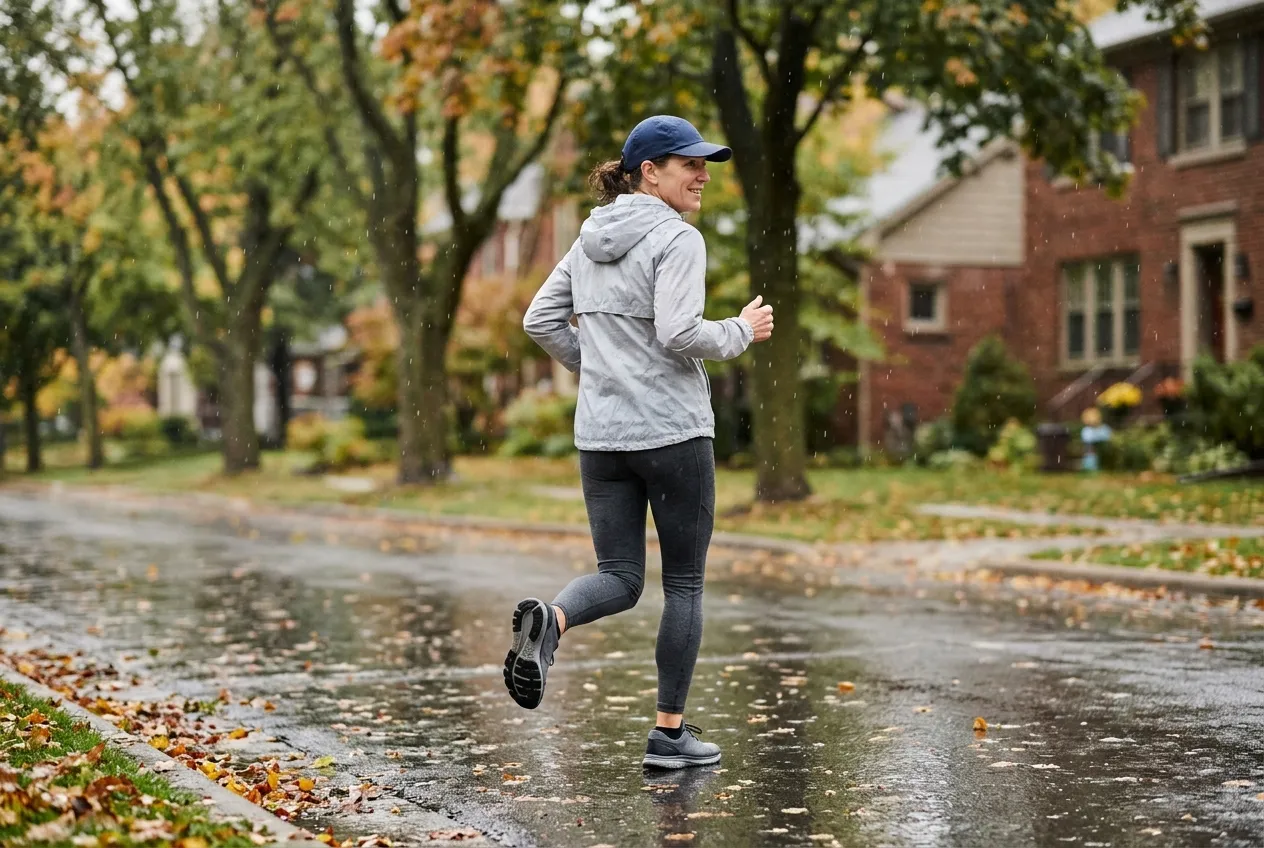
Running in the rain is fine for most healthy runners. Water won’t hurt you. What can hurt you is the stuff that sometimes comes with it: lightning, cold, slick pavement and drivers who can’t see well. So the rule is short. If you hear thunder, stay in (or head in). If it’s a cold rain, especially around 40°F and below, dress for it and keep the run close to home. Anything else is just a wetter version of a normal run, and plenty of runners secretly love those.
Below: how to make the call, what to wear, chafing and blisters, footing, and drying your shoes for the next one.
Is it bad to run in the rain?
No. A run in steady rain on a mild day carries about the same risk as any other run. You get wet, your shoes get heavier, and you come home feeling a little tougher. That’s mostly it.
Three things change the answer:
- Lightning. This one isn’t up for debate. More on it next.
- Cold. Wet clothes pull heat away from your body, which is how people get dangerously chilled on days that don’t look dangerous.
- Traction and visibility. Wet roads are slicker for you and for the cars around you, and rain usually comes with gray light or full darkness.
If none of those apply, go run.
When to skip the run: thunder and lightning
The National Weather Service slogan is “When Thunder Roars, Go Indoors,” and it’s not a suggestion. According to the NWS lightning safety overview, “there is no safe place outside when thunderstorms are in the area.” If you can hear thunder, you’re likely within striking distance.
That catches runners off guard. The NWS guidance on lightning and outdoor sports says a significant lightning threat extends about 6 to 10 miles out from the base of a thunderstorm cloud, and that thunder can usually be heard about 10 miles away when there’s no background noise. So by the time you hear it, you’re in range.
What that looks like on a run day:
- Check the radar before you go. If storms are in the forecast, pick a short loop near home or move the run.
- Hear thunder mid-run? Get to real shelter. The NWS counts substantial buildings and hard-topped vehicles as safe. Rain shelters, small sheds and open vehicles aren’t.
- Wait 30 minutes after the last thunder before heading back out, even if the rain has stopped.
When to shorten the run: cold rain
This is the one people underestimate. The CDC notes that hypothermia can happen even at cool temperatures above 40°F if you get chilled from rain or sweat. A run in cold rain hands you both at once.
Running makes plenty of heat while you’re moving. Trouble starts when you slow down: a walk break, a long red light, a cramp, the last tired mile. Your heat output drops while soaked clothes keep pulling heat away. A review of marathon medical data found that cold, wet conditions increase hypothermia in exhausted marathon runners and send more of them to the medical tent.
On cold rain days:
- Watch the wind. Rain plus wind is the worst combination. Our guide to running in the cold covers wind chill limits and layering.
- Run loops close to home. If you start to shiver, you want a hot shower nearby, not a long trip back.
- Know the warning signs. The CDC lists shivering, exhaustion, confusion, fumbling hands, memory loss, slurred speech and drowsiness. If you can’t work a zipper, or a running partner starts slurring words, the run is over. Get inside, get warm, and get medical help if body temperature drops below 95°F.
- Near freezing, assume ice. Wet pavement can glaze over on bridges and in shady spots when temperatures hover around freezing.
What to wear running in the rain
You’re not going to stay dry. Accept that early and the whole thing gets easier. The goal is staying comfortable while wet.
Skip cotton. It soaks up water, gets heavy and stays wet against your skin. A Cleveland Clinic family medicine doctor calls cotton shirts “notorious” for causing nipple chafing, “especially as the shirt gets heavy and wet with sweat.” Rain just soaks them faster. Synthetic or merino wool tops are the way to go.
Wear a cap with a brim. Honestly, it’s the most useful rain gear you can own. It keeps water out of your eyes so you can actually see the road.
Pick a light shell over a heavy raincoat. A thin, water-resistant running jacket blocks the wind, which is what really chills you. A fully waterproof jacket keeps rain out but can trap sweat in on milder days, so you end up wet from the inside anyway. Save the heavy-duty waterproof layer for cold rain.
Go with shorts or tights. Loose sweatpants turn into heavy, dripping weights.
| Conditions | Top | Bottom | Extras |
|---|---|---|---|
| Warm rain | Synthetic tee or tank | Shorts | Brimmed cap |
| Cool rain | Synthetic long sleeve plus a light shell | Shorts or tights | Cap, light gloves |
| Cold rain (around 40°F and below) | Wicking base layer, warm mid layer, waterproof shell | Tights | Cap, gloves, wool socks, dry clothes waiting at home |
Shoes and socks
Your feet are getting wet too. Plan for it.
- Wear your grippiest pair. Worn-smooth outsoles slide on wet pavement.
- Think twice about waterproof shoes. They help in drizzle and shallow puddles. In a real downpour, water comes in over the top and has nowhere to drain, so many runners prefer a mesh shoe that lets water out.
- Choose the right socks. The American Academy of Dermatology recommends nylon or moisture-wicking socks to prevent blisters. Cotton socks hold water and bunch up.
- Lace snug, not tight. The AAD says shoes shouldn’t be too tight or too loose, and a wet foot sliding around a loose shoe is a blister factory.
How to prevent chafing and blisters in the rain
Wet fabric clings, and clinging fabric rubs. Cleveland Clinic explains that soaked shirts sticking to your chest increase friction and the risk of jogger’s nipple, and that cooler weather makes it more likely. Their fixes are cheap: a layer of petroleum jelly on your nipples before the run, or a simple bandage over each one, plus a well-fitting, slightly snug moisture-wicking shirt so the fabric doesn’t slide back and forth.
Other hot spots are the inner thighs, underarms, sports bra lines and waistbands. Lube them before you leave, not after they start burning.
For your feet, the AAD’s blister advice holds up well on rainy days:
- Apply petroleum jelly or powder to spots that tend to blister.
- Cover known trouble spots with moleskin or a soft bandage, applied securely.
- Try two pairs of socks if one pair isn’t enough.
- Stop if you feel pain or see redness, before it turns into a blister.
And if a blister shows up anyway, the AAD says to avoid popping it, since that can lead to infection.
Footing and visibility on wet roads
Rain changes what’s slippery. Watch for:
- Painted road lines and crosswalks
- Metal manhole covers, grates and utility plates
- Wet leaves, which pile up on fall sidewalks
- Puddles that hide potholes and curb edges
- Wooden bridges and boardwalks
Shorten your stride, keep your feet under your hips, and take turns and downhills slower than usual.
Being seen matters just as much. Rain means wipers, glare and fogged windshields for drivers. Daylight saving time ended on November 1, so a lot of evening runs now happen in the dark. According to NHTSA’s 2024 pedestrian data, 76% of pedestrian deaths happened in the dark, and NHTSA’s definition of a pedestrian includes people running and jogging.
- Wear a bright top, and put reflective strips on moving parts like ankles and wrists.
- Add a headlamp or clip-on light on gray days and after dusk.
- Run facing traffic when there’s no sidewalk.
- Assume drivers can’t see you, especially at intersections.
How much slower should you run in the rain?
A bit slower, and that’s fine. Wet roads call for shorter, more careful strides, and soaked shoes weigh more. Run by effort, not pace. If an easy run feels easy, it’s working, whatever the watch says.
Hard workouts are a different call. Fast running on slick pavement is how people slip. Swap the speed session for an easy run and do the workout tomorrow, or move it to a track or a treadmill.
Running in the rain with just your watch
Phones and rain don’t love each other. You can zip yours into a plastic bag, or leave it home.
Apple says Apple Watch Series 2 and later have a water resistance rating of 50 meters and can be worn during exercise and walking in rain, though water resistance isn’t permanent and can diminish over time. Every Apple Watch since the Series 2 also has its own GPS, so you can track a run with your Apple Watch without your phone. If that’s how you like to run, Vima Run has an Apple Watch app that starts, pauses and saves a run without the iPhone, so the phone stays dry on the counter.
One trade-off worth knowing: a GPS-only watch can’t call for help without the phone nearby. For a solo run far from home, a cellular watch or a bagged phone is the safer call.
After the run: dry out fast (you and your shoes)
Get out of wet clothes as soon as you’re home. The CDC’s hypothermia warning is about getting chilled, and standing around in soaked clothes is exactly how that happens. Hot shower, dry layers, warm drink.
Then deal with your shoes. Nike’s shoe drying guide gives a simple method:
- Pull out the insoles and dry them separately.
- Stuff the shoes with crumpled newspaper.
- Swap in fresh paper when it gets soaked.
- Leave them indoors in a dry, well-ventilated spot.
Expect about 12 hours. Skip the clothes dryer, the oven and direct sunlight. Nike warns that heat can shrink shoes and weaken the glue that holds them together, and that sunlight causes excessive wear. If you run in the rain a lot, a second pair lets one dry while you wear the other, and it’s worth knowing how many miles running shoes last before you buy.
Frequently Asked Questions
Is it bad to run in the rain?
No, not for most healthy runners. Rain on its own just makes you wet. The real risks are lightning, cold rain that can lead to hypothermia, slippery surfaces and poor visibility, so skip the run when there’s thunder and dress carefully when it’s cold.
Can running in the rain make you sick?
Colds come from viruses, not from rain itself. That said, in one trial of 180 people, 13 of the 90 who had their feet chilled reported a cold in the following four to five days, compared with 5 of 90 who weren’t chilled. Getting dry and warm soon after a cold, wet run is a smart habit either way.
What should I wear to run in the rain?
Wear synthetic or wool layers instead of cotton, a cap with a brim, and a light water-resistant jacket if it’s cool or windy. Add moisture-wicking socks and your grippiest shoes. In cold rain, around 40°F and below, add a warm mid layer, gloves and a waterproof shell.
Should you run in a thunderstorm?
No. The National Weather Service says there’s no safe place outside when thunderstorms are in the area, and lightning can reach about 6 to 10 miles from a storm. Head indoors when you hear thunder and wait 30 minutes after the last rumble before going back out.
How do you dry running shoes after a rainy run?
Remove the insoles, stuff the shoes with crumpled newspaper and replace it as it gets wet, then leave them in a dry, ventilated spot indoors. It takes about 12 hours. Avoid the dryer and other high heat, which can shrink shoes and weaken the glue.
The bottom line on running in the rain
Rain is rarely a reason to skip a run. Thunder is. Cold rain deserves respect, extra layers and a short loop near home. Everything else is solved with a brimmed cap, no cotton, a little petroleum jelly and shoes with real grip.
Go a little slower, stay visible, and dry everything out when you get back. And when the radar’s lit up with storms, move the run inside. The miles will still be there tomorrow.

Derek Clark
Co-founder of Vima Fitness. Building simple, privacy-focused fitness apps for iPhone and Apple Watch since 2011. Runner, cyclist, and firm believer that fitness apps shouldn't need a tutorial.