How Far Should a Beginner Cycle? Distance Targets by Week
 Derek Clark
·
·
Updated
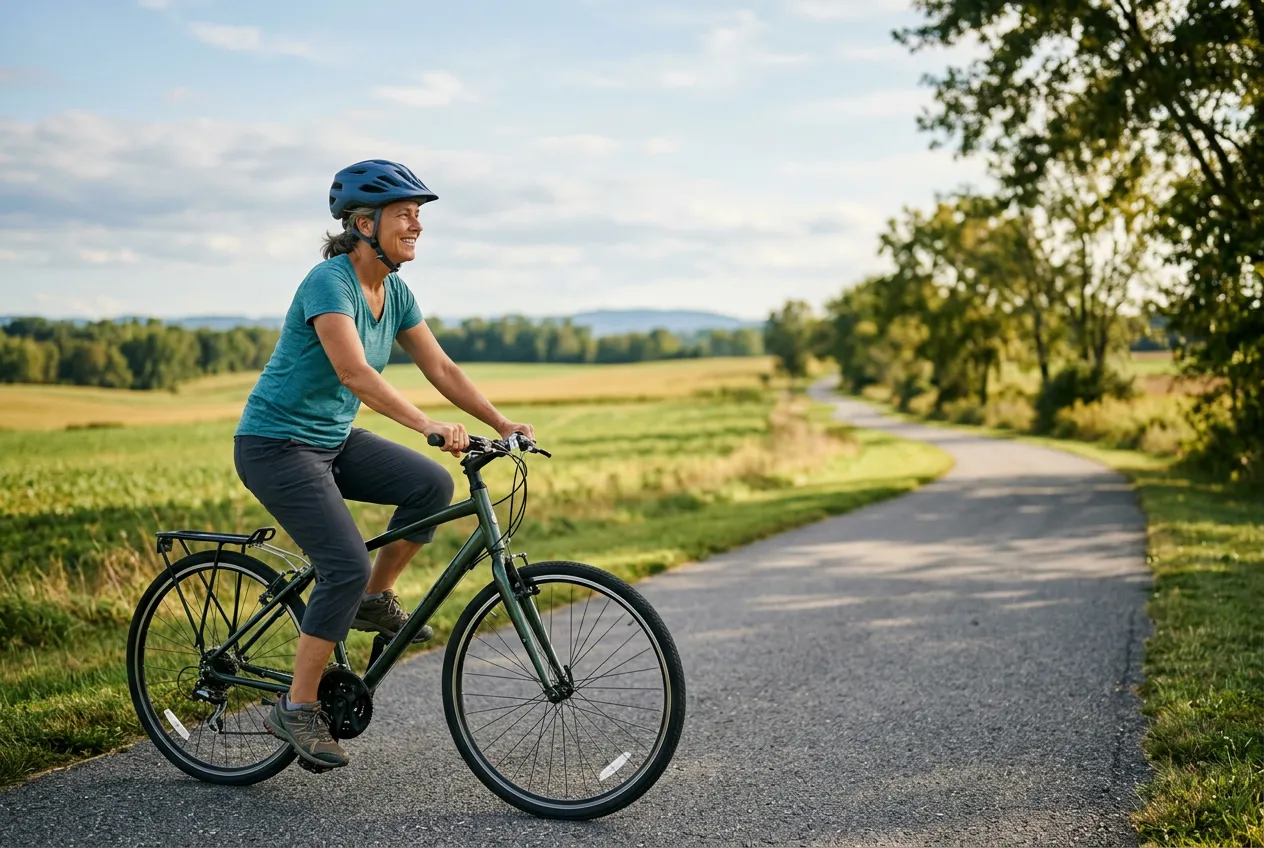
A good first ride for most beginners is about 30 minutes at an easy pace, which works out to roughly 5 miles at the 10 mph or so a new rider can expect to average (BikeRadar notes a beginner might struggle to hold 10 mph over an hour or two on a road bike). If you haven’t ridden in years, 15 to 20 minutes is plenty for ride one. From there, ride three times a week and stretch your longest ride a little each week. By week 8, a 90 to 120 minute ride covering roughly 15 to 20 miles on flat ground is a realistic target, and 20 to 30 miles makes a natural next goal.
Those numbers are a starting point, not a test. A hilly route, a heavy hybrid or a stiff headwind can cut your distance way down without you doing anything wrong. That’s why the smartest way to build up is by time, with distance as the scoreboard.
Should Beginners Track Time or Distance?
Time, at least for the first couple of months. Your speed swings with the bike, the terrain and the wind, so the same 10 miles can take far longer on a windy, hilly day than on a calm, flat one. Thirty minutes is always thirty minutes.
Time also lines up with the health guidelines. The CDC recommends 150 minutes of moderate activity a week for adults, and it counts bicycling slower than 10 mph on level ground as moderate and faster than 10 mph as vigorous. So five easy half-hour rides hit the target, even if you never look at the odometer.
Distance gets fun once you’re riding regularly, because it’s such a clear sign of progress. An app like Vima Bike records distance and time for every ride, plus a route map color-coded by speed, so you can watch your long ride grow week to week (and see exactly where that headwind got you).
What Affects How Far You Can Ride
Bike type. You’ll go faster, and so farther in the same time, on a road bike with drop bars and skinny tires than on a flat-bar hybrid or a mountain bike. An e-bike stretches things even more, and yes, e-bike riding still counts as exercise.
Terrain. Hills drag your average speed down, so a hilly route takes longer than a flat one of the same length.
Wind. A headwind is like a hill that never ends. Start your ride into the wind when you can, so you get the tailwind on the way home when you’re tired.
Stops. Traffic lights, intersections and busy paths eat into your average.
Comfort. Here’s the one that surprises people. For a lot of beginners, the first thing to give out isn’t their legs. It’s their backside, hands or neck. Comfort often sets your limit before fitness does, so bike fit (below) matters early on.
An 8-Week Beginner Cycling Plan With Distance Targets
Ride at a pace where you could hold a conversation. The distance column assumes about 10 mph on mostly flat ground, so treat it as a rough guide and go by the minutes.
| Week | Rides per week | Shorter rides | Long ride | Long ride at about 10 mph |
|---|---|---|---|---|
| 1 | 3 | 20 to 30 min | 30 min | About 5 miles |
| 2 | 3 | 25 to 30 min | 40 min | 6 to 7 miles |
| 3 | 3 | 30 min | 50 min | About 8 miles |
| 4 | 3 | 25 to 30 min | 40 min (easier week) | 6 to 7 miles |
| 5 | 3 to 4 | 30 to 40 min | 60 min | About 10 miles |
| 6 | 3 to 4 | 30 to 40 min | 75 min | 12 to 13 miles |
| 7 | 3 to 4 | 30 to 40 min | 90 min | About 15 miles |
| 8 | 3 to 4 | 30 min | 90 to 120 min | 15 to 20 miles |
A few rules make it work. Leave at least one rest day between your harder rides. Repeat any week that felt like a struggle (there’s no penalty for taking 10 weeks). And keep week 4 easier on purpose, since your body adapts during the lighter weeks, not just the hard ones.
Starting from zero fitness? Go slower than this. Cyclescheme’s 8-week beginner plan opens with 10-minute rides and builds to a single 10-mile ride by the final week, which is a perfectly good path too.
What Is a Good Average Speed for a Beginner Cyclist?
Somewhere around 10 mph on flat ground is a normal place to start, and slower on a hybrid or mountain bike. According to the same BikeRadar guide, riders who stay consistent can work up to holding the mid-teens (around 15.5 mph) over several hours.
For context, the Adult Compendium of Physical Activities, which researchers use to rate exercise intensity, labels the common speed bands like this:
| Speed | How the Compendium describes it |
|---|---|
| Under 10 mph | Leisure, to work or for pleasure |
| 10 to 11.9 mph | Leisure, slow, light effort |
| 12 to 13.9 mph | Leisure, moderate effort |
| 14 to 15.9 mph | Racing or leisure, fast, vigorous |
So if you’re averaging 10 to 12 mph in your first month, you’re right where a beginner should be. Speed comes on its own with consistent riding. Chasing it early is how people end up sore and skipping rides.
Signs You Overdid It
Some tiredness after a new kind of exercise is normal. These signs mean you pushed too far.
Soreness that hangs around. Cleveland Clinic lists muscle soreness lasting more than two days as a sign of overreaching, and suggests taking a couple of days off.
Fatigue that builds instead of fading. Deep tiredness, poor sleep, catching every cold going around, or rides that keep getting harder are classic overtraining signs. Back off, and talk to a doctor or physical therapist if it doesn’t improve.
Knee pain, numb hands or saddle pain that gets worse. These usually point to bike setup rather than fitness. See the fit section below.
Dreading the next ride. If you’re starting to hate it, the plan’s too aggressive. Repeat an easier week.
And chest pain, dizziness or unusual shortness of breath is a stop-now, call-your-doctor situation, not something to ride through.
Saddle Soreness and Bike Fit Basics
A sore backside in your first couple of weeks is normal while your sit bones get used to the saddle. Pain that doesn’t improve (or turns into chafing) usually means the setup is off. Our guide to fixing the most common cycling aches and pains walks through each fix, but three basics solve a lot.
Set your saddle height. A review in Sports Medicine suggests setting it so your knee keeps about 25 to 30 degrees of bend at the bottom of the pedal stroke. The same review found that pressure on the kneecap tends to rise as the saddle gets lower, which is why a low saddle so often means sore knees.
Level the saddle. A nose that tilts up puts weight on soft tissue. A nose that tilts down slides you forward onto your hands.
Wear padded shorts. Cycling shorts (with nothing underneath) and standing up out of the saddle for a few seconds every so often make longer rides far more comfortable.
Riding Indoors Counts Too
Bad weather, short days or no safe routes nearby? An indoor bike works fine for this plan. Just follow the minutes instead of the miles, because indoor “distance” is an estimate, and with no wind, hills or coasting it won’t match what you’d cover outside. Our comparison of indoor cycling vs. outdoor riding covers what each does better.
Getting Back on a Bike After Years Off
If the bike’s been sitting in the garage, check the tires, brakes and chain before you go anywhere, then make ride one short and flat. Fifteen to twenty minutes on a quiet route is plenty. Our guide to starting cycling when you haven’t ridden in years has a gentler four-week starter plan and a checklist for the bike itself. And wear a helmet, every ride.
Frequently Asked Questions
How long should a beginner’s first bike ride be?
About 30 minutes at an easy, conversational pace, or 15 to 20 minutes if you haven’t ridden in years. Pick a flat, quiet route and turn around before you feel tired, since you still have to ride home.
Is 10 miles a good bike ride for a beginner?
Yes, as a goal for your first month or two. At a typical beginner pace it’s about an hour of riding. In the plan above, the long ride reaches 10 miles in week 5, and Cyclescheme’s plan for complete beginners saves it for week 8.
How many miles a week should a beginner cycle?
Using the plan above at about 10 mph, roughly 12 to 15 miles across three rides in week 1, building to about 25 to 35 miles a week by week 8. Go by time if your routes are hilly or windy, since your miles will come out lower.
Is cycling 30 minutes a day good exercise?
Yes. Five 30-minute rides a week adds up to 150 minutes, the CDC’s weekly target for moderate activity. Easy riding counts, and faster riding counts even more.
Start Small, Ride Often
How far should a beginner cycle? Less than you think on day one, and more than you’d guess by month two. Start with about 30 easy minutes, add a little to one ride each week, and let the miles follow. Get the saddle right, take the rest days, and save the speed for later.

Derek Clark
Co-founder of Vima Fitness. Building simple, privacy-focused fitness apps for iPhone and Apple Watch since 2011. Runner, cyclist, and firm believer that fitness apps shouldn't need a tutorial.