Cycling in Cold Weather: What to Wear and How Cold Is Too Cold
 Derek Clark
·
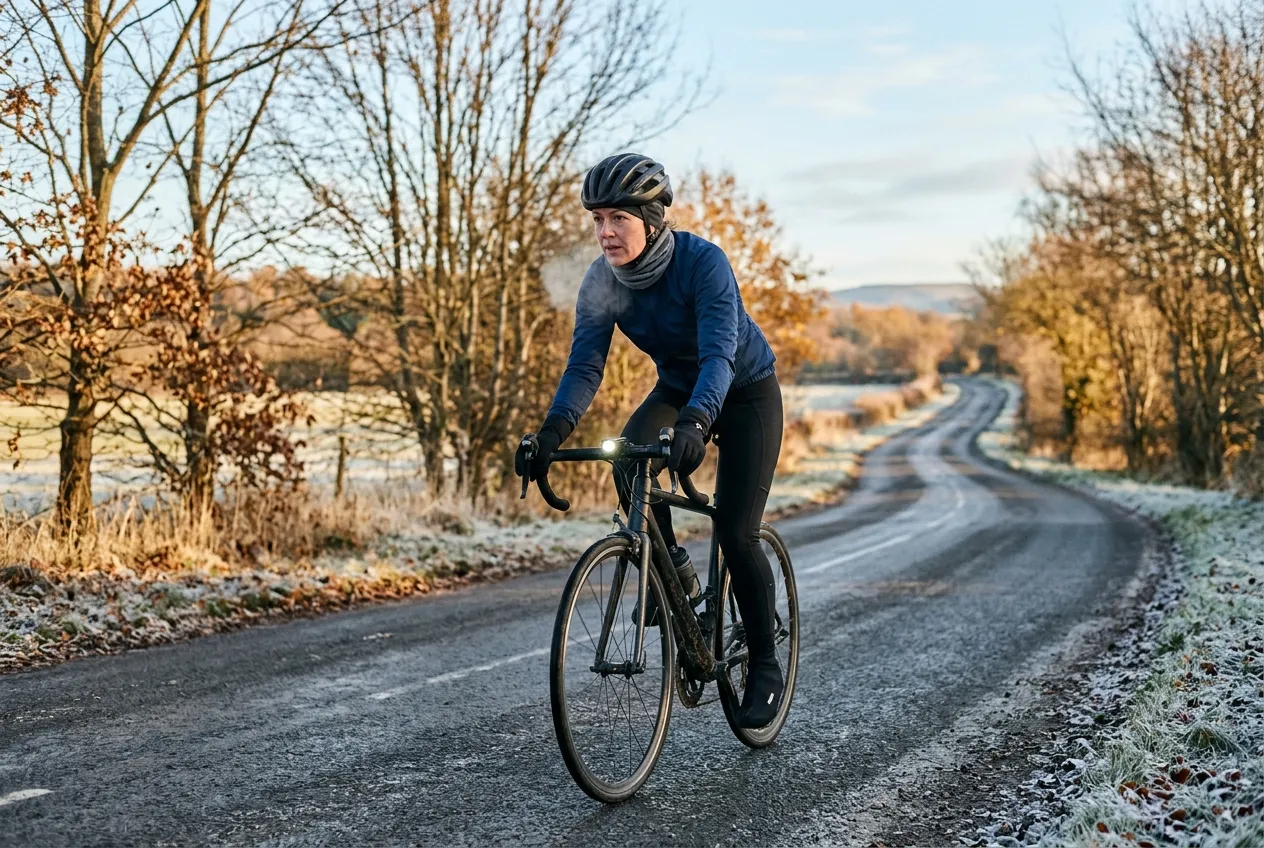
There’s no official temperature where cycling in cold weather becomes unsafe. The real limits are the wind chill on your skin at riding speed and the condition of the road. And riding speed counts as wind. Pedal at 15 mph on a calm 0°F morning and the National Weather Service wind chill formula puts the air hitting your face at about minus 19°F, the point where NWS says exposed skin can freeze in 30 minutes. Above that, the right layers make winter riding perfectly doable. Ice, though, can end a ride long before the thermometer does.
Here’s why a bike feels so much colder than a walk, what to wear at each temperature, and how to handle ice, salt and early sunsets.
How cold is too cold to bike?
The American College of Sports Medicine’s position stand on cold injuries says exercise can be done safely in most cold environments. It recommends using the wind chill index to judge frostbite risk, with heightened vigilance once wind chill drops below minus 18°F.
The catch for cyclists is that you hit that line at a warmer air temperature than a walker does, because you’re making your own wind. So estimate the wind chill at your riding speed (the table in the next section does the math), then use it like this:
- Wind chill above 20°F: A normal winter ride. Layer up and cover your ears.
- 0 to 20°F: Serious gloves, a neck gaiter, and loops that stay close to home.
- 0 to minus 18°F: Cover every bit of skin, including your nose, and keep it short.
- Below minus 18°F: Thirty-minute frostbite territory. Take it to the trainer.
Then look at the road. Black ice, fresh snow over ice or freezing rain make the temperature irrelevant.
Why cycling feels colder than walking or running
The NWS defines wind chill as how cold it feels on exposed skin once moving air pulls heat away, and it only applies at 50°F or below with wind above 3 mph. On a bike, the air moving past you is your speed plus any headwind. Plugging riding speed into the NWS formula isn’t a perfect model (it assumes you’re standing still in the wind), but it shows the effect clearly.
Here’s how a calm day feels at different speeds:
| Air temperature (no wind) | Walking (about 3 mph) | Running (6 mph) | Riding 10 mph | Riding 15 mph | Riding 15 mph into a 10 mph headwind |
|---|---|---|---|---|---|
| 40°F | About 40°F | 36°F | 34°F | 32°F | 29°F |
| 30°F | About 30°F | 24°F | 21°F | 19°F | 16°F |
| 20°F | About 20°F | 12°F | 9°F | 6°F | 3°F |
| 10°F | About 10°F | 0°F | minus 4°F | minus 7°F | minus 11°F |
| 0°F | About 0°F | minus 12°F | minus 16°F | minus 19°F | minus 24°F |
Walking speed sits below the formula’s 3 mph cutoff, so a walker on a calm day basically feels the air temperature. A rider at 15 mph feels 8 to 19 degrees colder, and the gap grows as the air gets colder.
Descents are the worst of it: almost no pedaling, so almost no heat, and the most wind. At 30°F, a 30 mph descent works out to a wind chill of about 15°F. Add sweat from the climb you just finished and you can go from too warm to chilled very quickly.
Sweat matters too. The CDC notes that hypothermia can happen even above 40°F when someone gets chilled from rain or sweat. So the goal isn’t just warmth. It’s warmth without soaking your base layer. Start your ride feeling slightly cool, and unzip on climbs before you overheat.
Sunshine helps, too. The NWS says bright sun can raise the wind chill by 10 to 18°F.
What to wear cycling in cold weather, by temperature
Think in three layers. A base layer that wicks sweat (synthetic or merino wool, never cotton), an insulating middle layer, and a windproof shell. On a bike the wind hits your front, so wind-blocking front panels on a jacket or tights do a lot of the work.
This table assumes light wind and a moderate effort. Use it as a starting point, then adjust:
| Temperature | Upper body | Legs | Hands | Feet | Head and face |
|---|---|---|---|---|---|
| 50s°F | Long-sleeve jersey or base layer, packable wind vest | Shorts with knee warmers, or light tights | Light full-finger gloves | Regular cycling socks | Nothing extra |
| 40s°F | Base layer, long-sleeve jersey, wind jacket | Full-length tights | Midweight full-finger gloves | Wool socks and toe covers | Thin ear band under the helmet |
| 30s°F | Base layer, fleece midlayer, windproof jacket | Thermal tights, ideally with wind-blocking front panels | Insulated winter gloves | Wool socks and full shoe covers | Thin skull cap and a neck gaiter |
| 20s°F | Thermal base layer, warm midlayer, insulated windproof jacket | Thermal tights plus wind pants | Lobster mitts, or bar mitts over thin gloves | Warm wool socks with shoe covers, or winter cycling boots | Balaclava and clear or lightly tinted glasses |
| Below 20°F | Everything above, plus another insulating layer | Insulated pants or bibs over thermal tights | Bar mitts over warm gloves | Winter cycling boots with room for thick socks | Full balaclava over the nose, ski goggles |
Shift one row colder for a headwind, a long descent, or a ride that will finish after sunset. Shift one row warmer if you’re doing hard intervals. Commuters riding at an easy pace make less heat, so they usually need the warmer row (the same easy pacing that helps you bike commute without getting sweaty also means you’re generating less warmth).
Hands and feet: the weak points
According to the CDC, frostbite most often hits the nose, ears, cheeks, chin, fingers and toes. On a bike, hands and feet get the worst of it. Your hands sit out front in the full wind and barely move. Your feet stay nearly still on the pedals, in the front wheel’s spray, often inside shoes with summer vents. And when you get cold, your body cuts blood flow to your hands and feet to keep your core warm.
A few fixes that work:
- Go for mitts. Lobster mitts (two fingers per pocket) keep fingers together and warmer than regular gloves while still letting you brake and shift. Bar mitts, also called pogies, attach to the handlebars and block the wind completely.
- Don’t cram your feet. Thick socks in snug cycling shoes can backfire. Cleveland Clinic warns that boots and clothes that are too tight can cause poor circulation. Use shoe covers over thinner wool socks, or get winter shoes with room to wiggle your toes.
- Block the vents. A strip of tape across your shoe vents, or a pair of toe covers, stops air from blowing straight through.
Know the difference between numb and frozen. Numb hands on a bike often come from pressure on the nerves in your palms (that’s covered in our guide to cycling aches and pains), but in winter, cold is the likelier culprit. The CDC lists redness or pain as the first warning sign of frostbite, followed by white or grayish-yellow skin, skin that feels firm or waxy, and numbness. If you see those signs, get inside and warm up gently. Don’t rub the area.
Ice, wet leaves and salt: reading winter roads
Cold is something you can dress for. Slippery roads are the bigger risk, and they’re harder to spot.
- Black ice looks like wet pavement. Be suspicious of shiny patches in early mornings, shaded corners, and anywhere meltwater runs across the road and refreezes. Bridges and overpasses tend to freeze first.
- If you hit ice, don’t brake or turn. Keep the bike upright, stay loose, and coast straight across. Do your braking before the patch.
- Wet leaves are slick too. In late fall they cover potholes and stay wet for days, especially in bike lanes where nobody clears them. Slow down for corners.
- Lower your tire pressure a little (staying within the range printed on the tire) for more grip, and check it before each ride, since cold air drops pressure. If you ride on icy roads often, studded tires are worth a look.
- Fenders keep slush off you and your drivetrain. They’re the cheapest comfort upgrade in winter riding.
Lights matter more after the time change
Daylight saving time ended on November 1, so a lot of evening rides now finish in the dark. That’s a real risk. In NHTSA’s 2024 bicyclist crash data, 52% of cyclists killed in crashes with motor vehicles died in the dark. In the winter months, the deadliest window was 6 to 8:59 p.m., with 27% of that season’s cyclist deaths.
Lighting laws vary by state, but a common setup looks like Washington’s law, which requires a white front light visible from at least 500 feet and a red rear reflector at night, with a red rear light allowed in addition. Arizona’s statute has a similar front light and rear reflector requirement. Check your own state’s vehicle code, then go beyond the minimum.
- Run a bright red rear light even where a reflector is all the law asks for.
- Put reflective material on your ankles and wrists, where the motion catches a driver’s eye.
- Charge lights after every ride. Cold drains batteries faster, so carry a small backup light on long rides.
Phones don’t love the cold either. If you track rides with Vima Bike, the Apple Watch app can start, pause and save a ride without your iPhone, so the phone can stay zipped in an inside pocket.
Bike care after salty rides
Salt, water and grit are hard on a bike. They strip lube off the chain and speed up rust on the drivetrain and bolts. After a ride on salted roads, give the bike a quick rinse instead of parking it wet.
Park Tool’s bike washing guide covers the basics. Rinse from the top down with a water bottle or a hose on low pressure, let the bike dry (a towel helps, and it lets you spot damage), and avoid blasting the bearings directly. Then wipe the chain with a clean rag and relube it, since cleaning removes the old lube.
When to move your ride indoors
Some days the outdoor ride just isn’t worth it. Move inside when the wind chill at your riding speed drops below about minus 18°F, when there’s ice or fresh snow on untreated roads, during freezing rain, or when snowbanks squeeze the shoulder so cars pass too close.
A trainer or stationary bike keeps your fitness going on those days. We break down the trade-offs in indoor cycling vs. outdoor riding. If you’re getting back on a bike after years away, there’s no shame in riding indoors on the iffy days and saving outdoor rides for dry roads while your handling skills come back.
Frequently Asked Questions
What should I wear cycling in 40 degree weather?
A wicking base layer, a long-sleeve jersey and a wind jacket on top, full-length tights, midweight full-finger gloves, wool socks with toe covers, and a thin ear band under your helmet. At 15 mph on a calm 40°F day, the NWS wind chill formula puts the air on your skin at about 32°F, so dress for freezing, not for 40.
Can you ride a bike in 20 degree weather?
Yes, if the roads are clear and you dress for it. At 20°F, riding 15 mph makes it feel like about 6°F on exposed skin, so you’ll want a balaclava, lobster mitts or bar mitts, insulated layers, and winter boots or shoe covers. Keep the first few rides short and stay close to home.
How cold is too cold to bike to work?
There’s no single number. Use the wind chill at your riding speed: below about minus 18°F, the American College of Sports Medicine recommends extra caution and NWS frostbite times get short. Ice, freezing rain and dark, snow-narrowed roads are often the real reasons to take the bus or ride the trainer.
Do I need to clean my bike after riding on salted roads?
Yes. Salt and grit strip lube from the chain and speed up rust. A gentle rinse with low-pressure water, a quick dry, and a fresh coat of chain lube after salty rides keeps the drivetrain running smoothly through winter.
The bottom line on cycling in cold weather
Cold alone rarely needs to stop a ride. Check the wind chill at your riding speed, dress in layers that block wind up front, and give your hands and feet extra protection. The real deal breakers are ice, freezing rain and wind chills down in frostbite territory.
Light yourself up now that evenings are dark, rinse off the salt, and keep a trainer option for the bad days. If you’re out walking through winter too, our guide to walking in cold weather has the full NWS frostbite breakdown.

Derek Clark
Co-founder of Vima Fitness. Building simple, privacy-focused fitness apps for iPhone and Apple Watch since 2011. Runner, cyclist, and firm believer that fitness apps shouldn't need a tutorial.